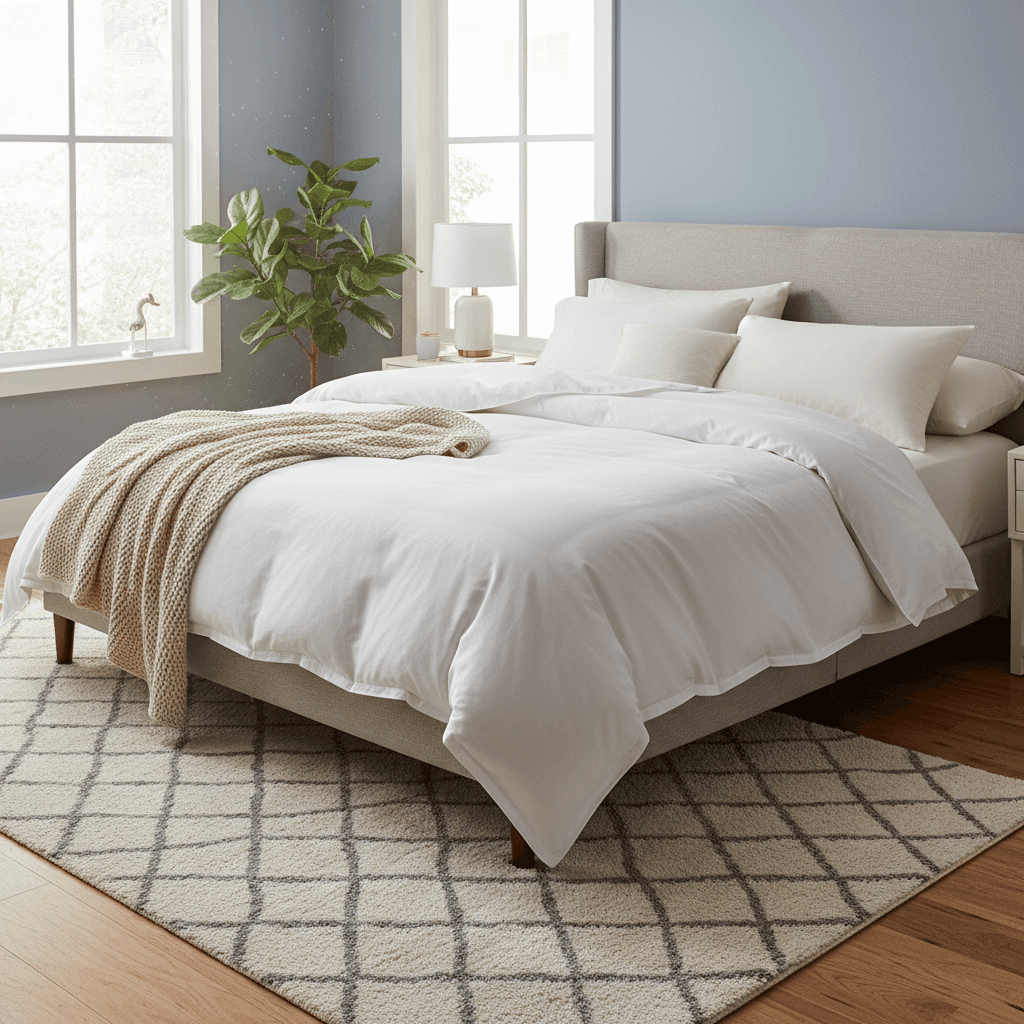
Down Alternative Comforters
Discover the allergy-free luxury of down alternative comforters. All the softness and warmth of traditional down, without the allergens, the animal products, or the dry cleaning bills.
2,400+
Monthly Searches
100%
Cruelty-Free
6+
Top Brands Reviewed
What Are Down Alternative Comforters?
Down alternative comforters use synthetic fill materials designed to replicate the warmth, loft, and softness of natural goose or duck down. Instead of animal feathers, they rely on engineered fibers that trap air and insulate your body throughout the night.
The result is a comforter that feels plush and cozy, performs well across all seasons, and avoids the common drawbacks of natural down: allergens, quill poking, ethical concerns, and the need for professional cleaning.
Modern manufacturing techniques have narrowed the gap significantly. Today's best down alternative comforters are virtually indistinguishable from their natural counterparts in terms of comfort, and they often outperform them in durability and ease of care.

Common Fill Types
Microfiber Clusters
Ultra-fine synthetic fibers engineered to mimic the loft and softness of natural down clusters. These hollow-core filaments trap air efficiently, creating insulation that feels remarkably similar to goose down.
Polyester Fill (Siliconized)
Polyester fibers treated with a silicone coating to reduce clumping and improve airflow. Siliconized fill maintains its shape through repeated washing and provides consistent warmth over years of use.
PrimaLoft
Originally developed for the U.S. military, PrimaLoft is a premium synthetic insulation known for retaining warmth even when wet. It offers the closest feel to natural down and is a favorite among high-end bedding brands.
Recycled Polyester (rPET)
Made from recycled plastic bottles, rPET fill offers a sustainable option without sacrificing performance. Brands like Buffy have popularized this eco-friendly fill, which performs comparably to virgin polyester.
Benefits That Make the Difference
Down alternative comforters have evolved far beyond basic polyester fill. Here is why millions of sleepers are making the switch.
Hypoallergenic
Synthetic fills do not harbor dust mites, mold, or mildew the way natural down can. For the estimated 20 million Americans with dust mite allergies, down alternative comforters offer a genuinely better night of sleep without the sneezing, congestion, or itchy eyes.
Vegan & Cruelty-Free
No geese or ducks are plucked or harmed. Down alternative comforters are made entirely from synthetic or plant-based materials, making them an ethical choice for anyone who wants comfort without compromise. Many brands also use recycled materials, adding an environmental benefit.
Machine Washable
Toss it in a large-capacity home washer and dryer. No dry cleaning required. Most down alternative comforters can be washed at home on a gentle cycle with cold water, saving both time and money on maintenance. They dry faster than natural down and resist clumping after washing.
More Affordable
Quality down alternative comforters typically cost 40-70% less than comparable natural down options. A premium queen-size down alternative runs $60-$150, while a quality goose down comforter of similar warmth starts at $200 and can exceed $500. The price gap is even wider for king and California king sizes.
Consistent Warmth
Synthetic fills distribute evenly throughout the comforter and resist shifting into cold spots. Unlike natural down, which can migrate to one corner of the baffle box, down alternative fill stays put. This means even warmth from edge to edge, night after night.
Great for All Climates
Down alternative comforters come in lightweight, all-season, and heavyweight options. Hot sleepers can choose a breathable microfiber fill that wicks moisture, while cold sleepers can opt for a dense polyester cluster fill that retains maximum heat. There is a weight for every preference.
Down Alternative Comforter Buying Guide
Choosing the right down alternative comforter comes down to four factors: warmth level, shell fabric, size, and construction. Here is what to look for.
Warmth Levels
Fill weight determines how warm the comforter feels. Think of it as the "fill power equivalent" for synthetic bedding.
Fill Weight: 20-30 oz (Queen)
Best for: Hot sleepers, summer use, warm climates
Thin and breathable with minimal insulation. Ideal for sleepers who run hot or live in warmer regions. Works well as a layering piece under a duvet cover with a heavier comforter for winter.
Fill Weight: 30-50 oz (Queen)
Best for: Most sleepers, year-round use, moderate climates
The most versatile option. Provides enough warmth for cool nights without overheating in warmer months. This is the sweet spot for most people and the most popular weight sold.
Fill Weight: 50-70 oz (Queen)
Best for: Cold sleepers, winter use, drafty bedrooms
Dense fill for maximum heat retention. Feels substantial and cocooning. Best for sleepers who keep the thermostat low, live in colder climates, or simply prefer a heavier, more enveloping comforter.
Shell Fabric
The outer shell affects breathability, softness, and durability. Here are the most common options.
100% Cotton
The gold standard. Natural, breathable, and soft against skin. Look for a thread count of 300 or higher for a silky feel and good fill containment. Cotton shells are the most breathable option for hot sleepers.
Bamboo-Derived Rayon
Naturally moisture-wicking and temperature-regulating. Bamboo shells have a silky smooth texture and are ideal for sleepers who alternate between hot and cold throughout the night. Also naturally antibacterial.
Microfiber (Brushed Poly)
The most affordable shell option. Brushed microfiber feels soft and resists wrinkling, but it is less breathable than natural fabrics. A solid choice for guest rooms, kids, or anyone on a tighter budget.
Construction Matters
How the comforter is stitched determines whether the fill stays evenly distributed or bunches into corners.
Box Stitch (Baffle Box)
The comforter is divided into individual squares, each filled separately. This prevents the fill from shifting and ensures consistent warmth across the entire surface. Baffle box construction uses inner walls of fabric between the top and bottom layers, allowing loft to expand fully within each box.
Sewn-Through (Quilt Stitch)
The top and bottom layers are stitched directly together in a grid pattern. Simpler and less expensive than baffle box construction, but the stitch lines create thin spots where heat can escape. Fine for lightweight summer comforters but not ideal for cold weather.
Size Guide
Measure your mattress and add 10-12 inches of drape on each side for a comforter that hangs properly. Here are the standard sizes.
| Size | Dimensions | Best For |
|---|---|---|
| Twin | 66" x 90" | Single sleepers, kids, dorm rooms |
| Twin XL | 68" x 90" | Taller teens, college dorms |
| Full/Double | 82" x 90" | Single sleepers who want extra room |
| Queen | 90" x 90" | Most couples, standard queen beds |
| King | 106" x 90" | Couples who want extra coverage |
| California King | 104" x 98" | Taller sleepers, Cal King beds |
Down vs. Down Alternative
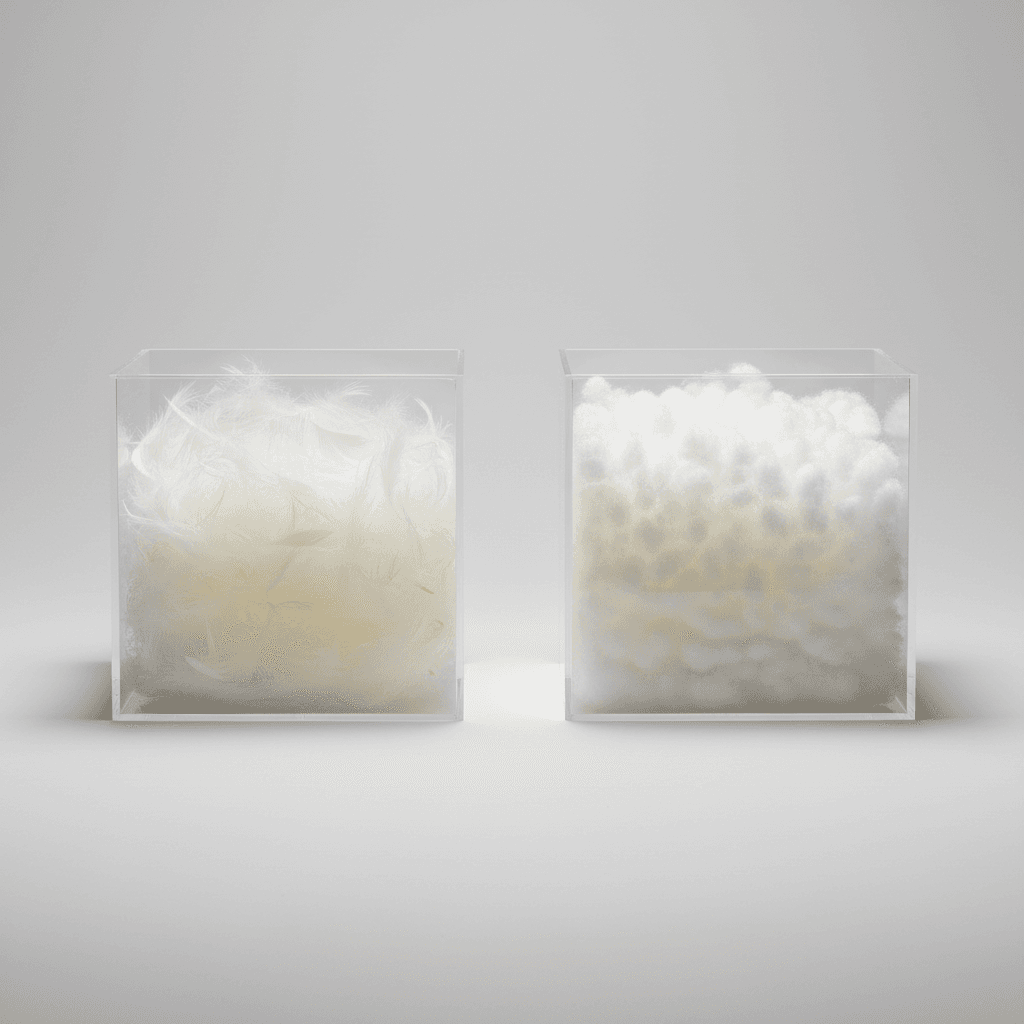
Natural down has genuine strengths. It is lighter, warmer per ounce, and lasts longer with professional care. But for most sleepers, down alternative comforters offer a better overall value: they cost less, they are easier to maintain, and they eliminate allergen concerns entirely.
The best choice depends on your priorities. If you want the lightest, warmest comforter money can buy and you do not have allergies, natural down is hard to beat. If you want excellent comfort at a fraction of the price with zero maintenance hassle, down alternative wins.
| Feature | Natural Down | Down Alternative |
|---|---|---|
| Allergens | Can trigger dust mite and feather allergies | ★Hypoallergenic, no animal allergens |
| Warmth | ★Excellent insulation, highest warmth-to-weight ratio | Very good insulation, slightly heavier for same warmth |
| Price | $200-$600+ for quality goose down | ★$30-$150 for comparable comfort |
| Care | Professional dry cleaning recommended | ★Machine washable and dryable at home |
| Durability | ★10-15 years with proper care | 5-10 years, easy to replace affordably |
| Weight | ★Lighter for the same warmth level | Slightly heavier for equivalent warmth |
| Ethical | Sourced from geese/ducks (varies by brand) | ★100% cruelty-free, no animal products |
| Odor | Can develop odor when damp | ★Odor-resistant, dries quickly |
| Fill Shifting | Fill migrates over time, especially in sewn-through | ★More stable fill distribution |
| Moisture | Absorbs moisture, slow to dry | ★Resists moisture, dries fast |
The Bottom Line
Down alternative wins 7 out of 10 comparison categories. Natural down edges ahead on warmth-to-weight ratio, overall durability, and lighter feel. For most sleepers, the combination of lower price, easier care, and allergy-free comfort makes down alternative the practical choice.
Top Down Alternative Comforter Brands
From budget-friendly basics to premium picks, these six brands consistently deliver quality down alternative comforters. Listed for informational purposes only.
Brooklinen
$149-$199Premium quality, direct-to-consumer pricing
Down Alternative Comforter
Brooklinen's down alternative comforter uses a proprietary microfiber fill that mimics 600+ fill power down. The shell is 100% cotton sateen with a 400 thread count. Known for their generous 365-day return policy and lifetime warranty. Available in lightweight and all-season weights.
Best for: Shoppers who want premium quality without the premium down price
Buffy
$129-$209Eco-friendly bedding made from recycled materials
Cloud Comforter
Buffy uses fill made from recycled BPA-free plastic bottles (the equivalent of about 50 bottles per comforter) wrapped in a eucalyptus fabric shell. The Cloud Comforter is designed for temperature regulation and breathability. Buffy was one of the first brands to popularize sustainable down alternative bedding.
Best for: Environmentally conscious shoppers, hot sleepers
Casper
$169-$249Sleep technology meets everyday comfort
Humidity Fighting Duvet
Casper's comforter focuses on temperature management with what they call humidity-fighting technology. The fill wicks moisture away from the body, and the cotton shell provides natural breathability. Known for their mattress expertise, Casper brings the same engineering approach to their bedding line.
Best for: Sleepers who want high-tech temperature regulation
Utopia Bedding
$25-$45Best-selling budget option on Amazon
All Season Down Alternative Comforter
With over 200,000 reviews and a consistent 4.5-star rating, Utopia Bedding's comforter is the best-selling down alternative on Amazon. It uses siliconized polyester fiber fill in a box-stitch construction with corner tabs for duvet cover attachment. The brushed microfiber shell is soft and wrinkle-resistant.
Best for: Budget shoppers, guest bedrooms, college dorms
Bedsure
$30-$55Quality bedding at accessible prices
Down Alternative Quilted Comforter
Bedsure has become a household name in affordable bedding. Their quilted comforter features box-stitched construction with eight corner and side tabs. The microfiber shell is brushed for softness, and the fill provides all-season warmth. They offer a wide range of colors and sizes rarely matched at this price point.
Best for: Color-matching, bedroom redecorating, value shoppers
Cuddl Duds
$60-$100Cozy warmth from the cold-weather comfort brand
Down Alternative Comforter
Known for their thermal clothing, Cuddl Duds brings the same warmth-first philosophy to bedding. Their comforters use a dense polyester fill designed for maximum heat retention, making them one of the warmest synthetic options available. The soft-brushed cover adds to the cozy factor.
Best for: Cold sleepers, winter use, anyone who loves heavy blankets
Brand information is provided for educational purposes. We do not sell products or earn commissions. Prices reflect typical retail ranges at time of publication and may vary.
Care & Maintenance Guide
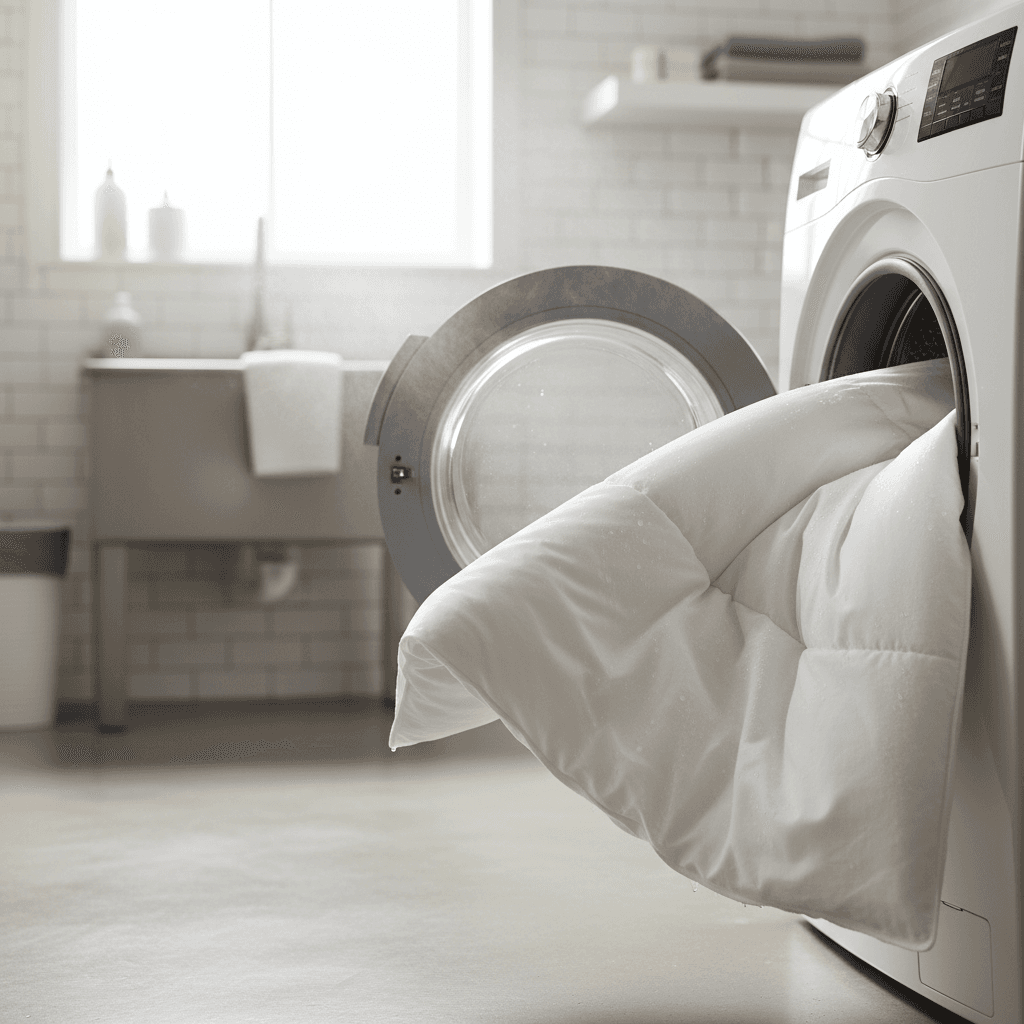
One of the biggest advantages of down alternative comforters is how easy they are to maintain. Unlike natural down, you can wash and dry them at home without professional help. Following a few simple guidelines will keep your comforter fluffy and fresh for years.
Washing
- Use a large-capacity front-loading washer (top loaders with agitators can damage stitching)
- Cold or lukewarm water only. Hot water can melt or deform synthetic fibers.
- Mild liquid detergent. Avoid powder detergents, bleach, and fabric softener.
- Gentle or delicate cycle. Extra rinse cycle recommended to remove all soap residue.
- Wash the comforter alone. Do not overload the machine.
Drying
- Tumble dry on low heat. Medium or high heat can damage synthetic fill and cause clumping.
- Add 2-3 clean tennis balls or dryer balls to break up fill clumps and restore loft.
- Expect a long dry cycle (60-90 minutes). A damp comforter can develop mildew.
- Check for dampness in the center before removing. If still damp, run another cycle.
- Never hang dry a down alternative comforter. The weight of the wet fill can stretch the shell fabric unevenly.
Frequency & Prevention
- Wash every 2-3 months with regular use, or immediately after spills.
- Use a duvet cover. It protects the comforter from body oils, sweat, and stains, reducing wash frequency.
- Shake and fluff your comforter daily or every few days to maintain even loft.
- Spot-clean small stains with a damp cloth and mild detergent rather than washing the entire comforter.
Storage Tips
When storing your comforter for the season, use a breathable cotton storage bag or a clean cotton pillowcase. Avoid plastic bags or vacuum-sealed bags for long-term storage as they compress the fill and can trap moisture. Store in a cool, dry place away from direct sunlight.
When to Replace
Plan to replace your down alternative comforter every 5-7 years with regular use. Signs it is time for a new one: the fill feels flat and does not bounce back after fluffing, you notice thin spots or uneven loft, the shell fabric is thinning or pilling, or it no longer keeps you warm the way it used to.
Frequently Asked Questions
Everything you need to know about down alternative comforters, answered clearly.
Contact Us
Interested in advertising on DownAlternativeComforters.com? Looking for a brand partnership, sponsored listing, or wholesale inquiry? We would love to hear from you.
Brand Partnerships
Feature your products in our buying guides and reviews
Advertising
Reach buyers actively researching down alternative comforters
Wholesale Inquiries
Connect with manufacturers and distributors